Surfing in Uluwatu: The Ultimate Bali Reef Break Guide
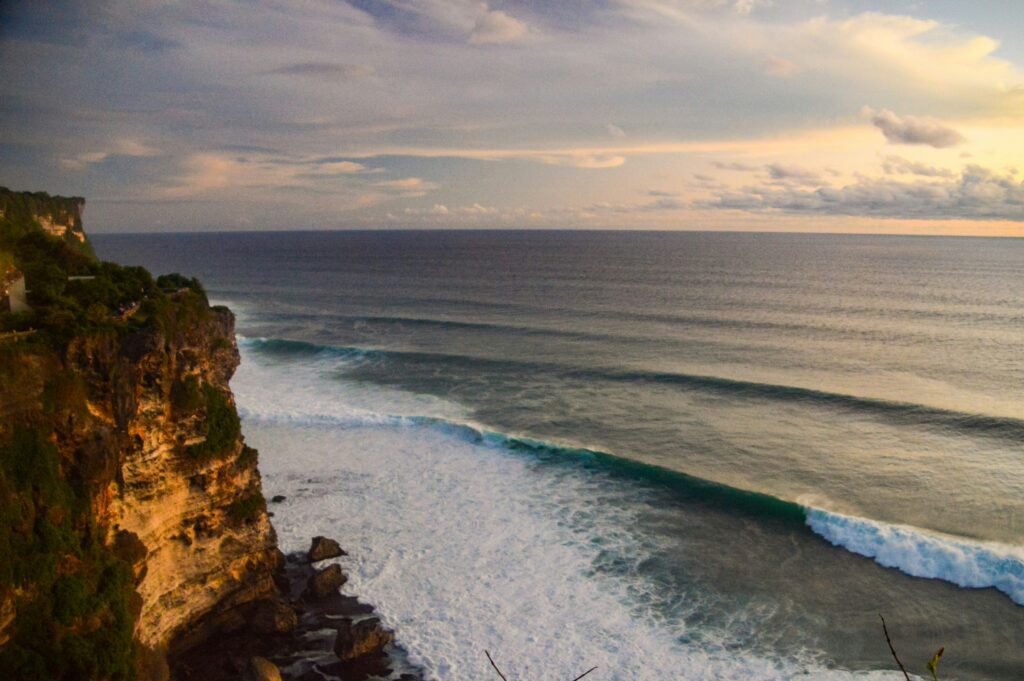
Surfing in Uluwatu is the experience that built Bali’s reputation among wave riders, and a single look at the cliff-lined coastline explains why this stretch of coast has been celebrated for decades. Long, peeling left-handers wrap around limestone headlands here, and surfers have been drawn to this exact stretch of reef from every corner of the globe since the 1970s. Whether you’re chasing your first green wave or hunting barrels at a world-famous reef break, this guide has been built to help. It covers what you need before you paddle out.
This corner of the Bukit Peninsula isn’t a single wave, even though it’s often spoken of that way. It’s a string of distinct breaks, each shaped by its own personality, tide preference, and skill requirement, and each demanding a slightly different approach from the surfers who paddle out there. Some breaks demand serious experience. Others are forgiving enough for a confident beginner who has already mastered the basics elsewhere. Knowing the difference in advance will shape your entire trip, since the wrong break on the wrong day can turn an exciting session into a dangerous one.
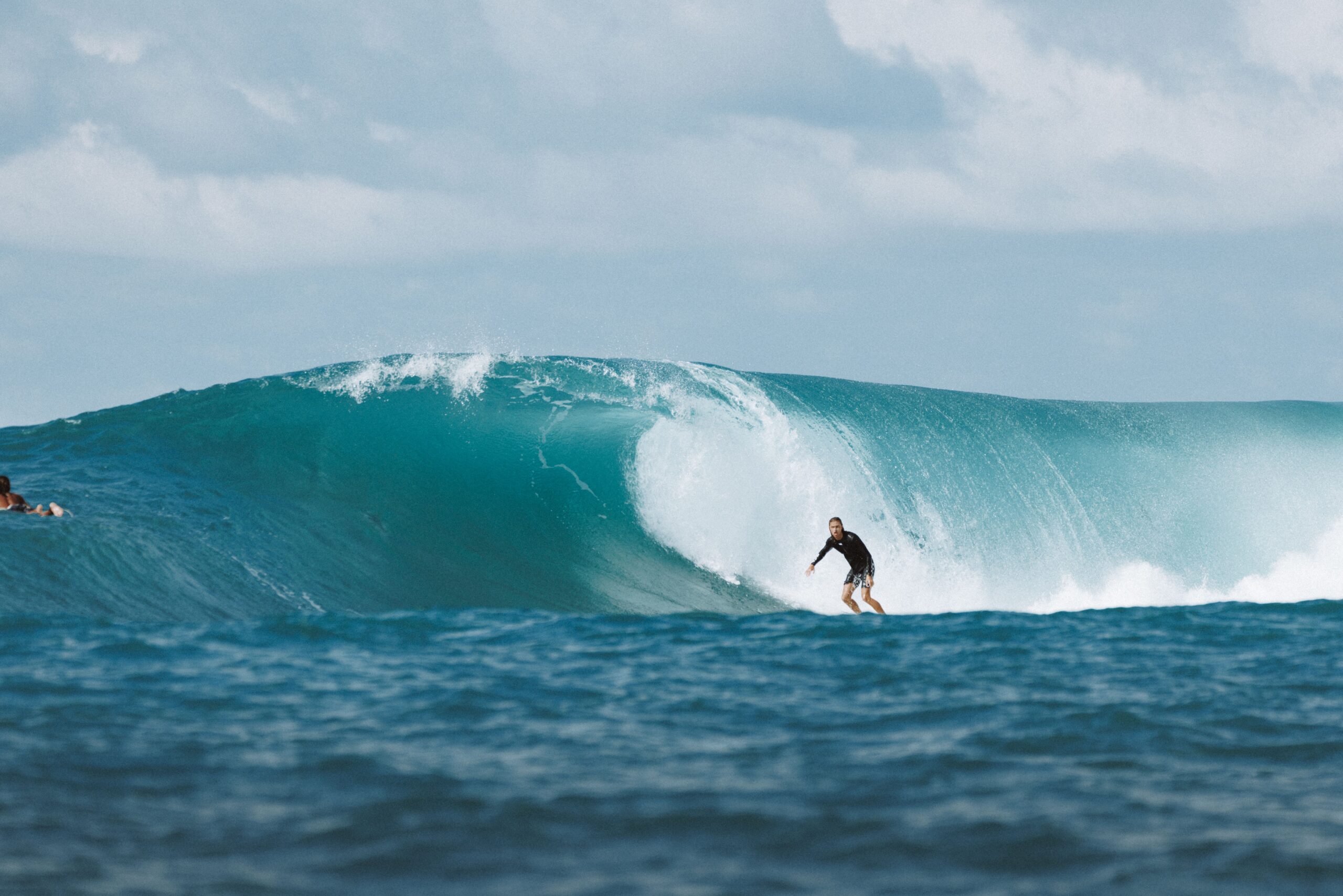
Surfing Uluwatu : Why it’s Bali’s most famous Break
The main break, often just called Uluwatu or Suluban, sits below the cliffs near Suluban Beach, and it is reached through a cave carved into the limestone, a small ritual that adds considerably to the spot’s mystique. Once through, the reef opens into five distinct peaks, including Temples, Racetrack, and The Peak, and each of these peaks holds swell differently depending on the tide and the size of the day.
A consistent current runs along the reef from Temples toward Padang Padang, so paddling out is rarely a straight line, and surfers are often carried some distance before they realise it. Conditions can shift fast here, and a manageable set can grow considerably within a single session, which is why sneaker sets are taken so seriously by anyone who knows the wave well. Locals treat the lineup with real respect, and visiting surfers are wise to follow the same unwritten rules.
Because the wave can be ridden at almost any size, from chest-high to well overhead, Uluwatu rewards patience as much as raw skill. Mid-tide is generally considered the most forgiving window, since the swell is spread evenly across the reef’s many sections at that point in the cycle.
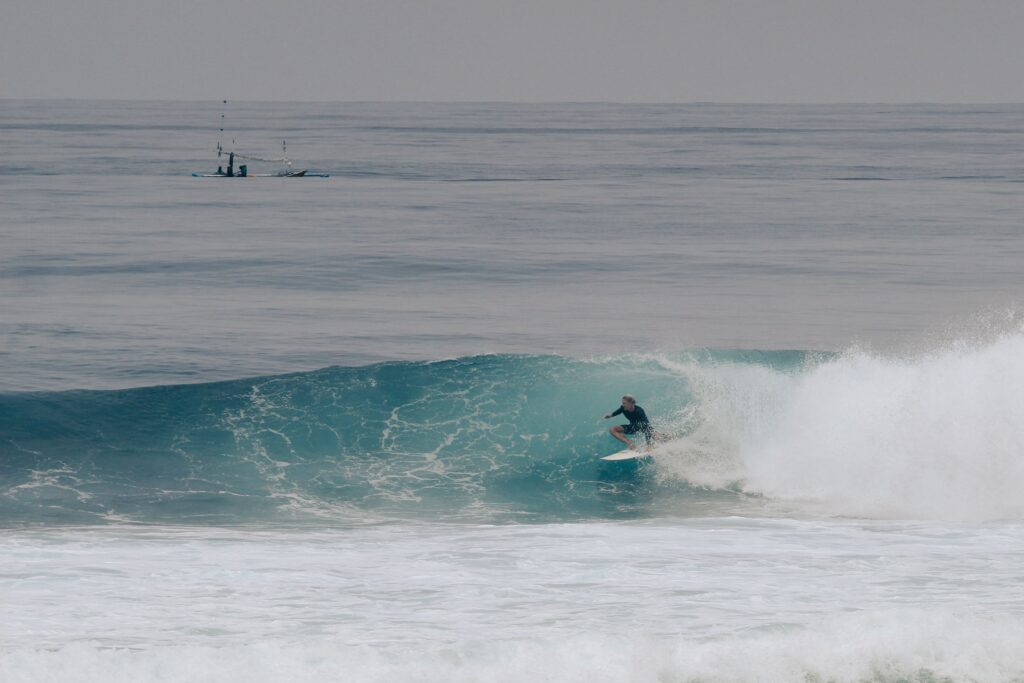
Surfing in Uluwatu : The best surf spots by skill level
Not every wave on the Bukit Peninsula is reserved for experts, even though the region’s reputation might suggest otherwise. The variety found across this short stretch of coastline is part of what makes it so special among surf destinations worldwide.
Beginner-friendly breaks
Dreamland Beach is widely considered the standout choice for first-timers, and for good reason. Unlike most of the reef-bound coastline nearby, it breaks over sand, which softens the consequences of a fall considerably and builds confidence faster than a reef ever could. Baby Padang, the gentler channel beside the legendary Padang Padang barrel, is another reliable option once basic paddling and pop-up skills have already been established elsewhere.
Intermediate progression
Balangan offers long, fast walls along the Bukit’s western side, and a noticeably thinner crowd than the cliff-front spots tends to make it a favourite among surfers who want quality waves without the elbow-to-elbow lineup. Bingin Rights, on a smaller day, gives confident intermediates a genuine taste of the barrel-heavy wave breaking next door, without quite the full commitment that the main Bingin wave demands.
Advanced and expert-only
Padang Padang, nicknamed the Balinese Pipeline, throws thick, hollow barrels whenever a big swell arrives, and this wave is reserved strictly for experienced surfers who understand its risks. Impossibles connects multiple sections into genuinely long rides for those willing to make the extra paddle most visitors skip. Then there’s the main Uluwatu break itself, which can be held at almost any size, because few other waves on Earth handle such a broad range so consistently well.
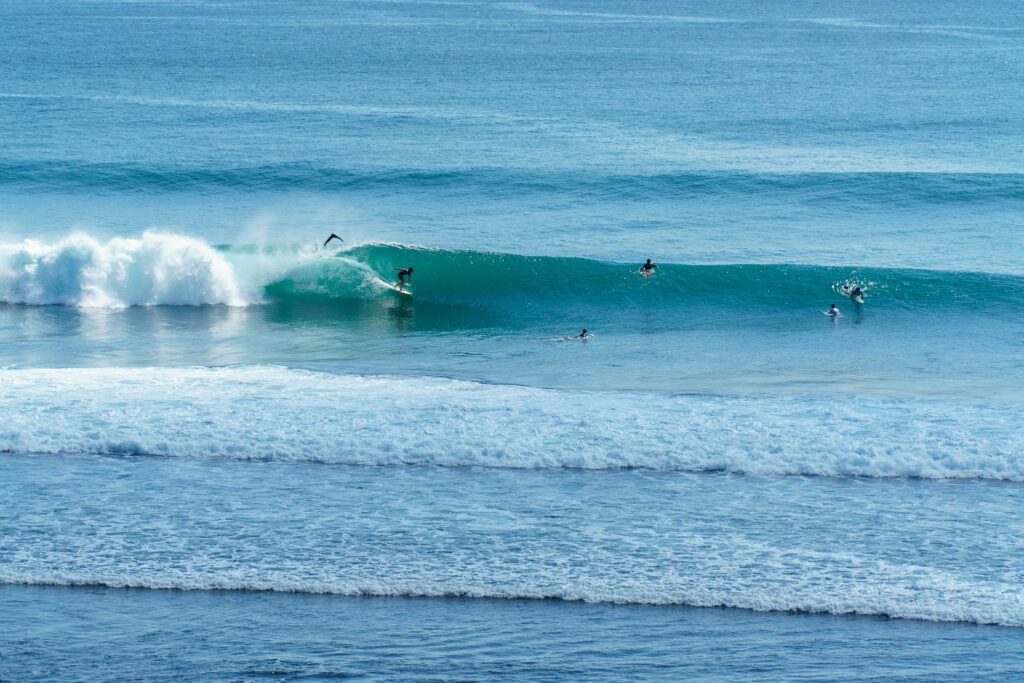
When to go surfing in Uluwatu: The Surf season explained
Surfing in Uluwatu peaks during the dry season, which runs roughly from April through October, when south-easterly trade winds blow offshore each morning and Indian Ocean swells arrive with welcome, dependable consistency. June through August brings the biggest and most reliable surf of the year, although this peak window also brings the thickest crowds and the steepest accommodation rates on the peninsula.
If you’d rather trade a little wave size for some extra elbow room, the shoulder months of April, May, September, and October are well worth considering before you book. The swell remains dependable through these months, but the lineup thins out noticeably once the peak season crowd has moved on. November through March, which marks Bali’s wet season, brings less predictable conditions to the Bukit’s west-facing breaks, though plenty of intermediate surfers still find fun, smaller days scattered throughout this quieter stretch.
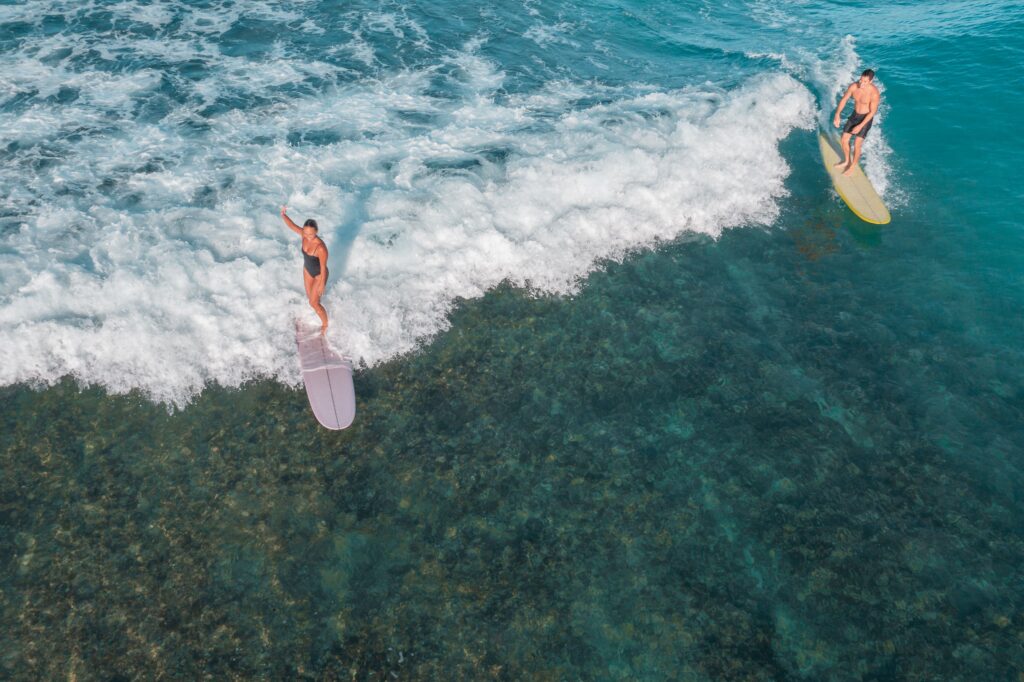
Surfing in Uluwatu: Etiquette + Safety & Reef Awareness
Surf etiquette, safety, and reef awareness
The reef beneath these waves is sharp coral rather than sand, and it simply doesn’t forgive carelessness the way a beach break might. Reef booties are a sensible investment for anyone surfing here regularly, since a basic understanding of tide height will keep most surfers off exposed rock at low water.
A few habits go a long way toward staying safe and welcome in the water:
- Match the wave to your level honestly, since the crowd itself becomes part of the risk at busier breaks once conditions pick up.
- Respect the pecking order, because established surfers have earned their priority over many years, and contesting that openly rarely ends well for a visitor.
- Know the channel before paddling out, since getting caught inside on a big set is treated as a genuinely serious situation by anyone who has experienced it.
- Exit during a lull rather than at the end of a ride, because another wave may already be approaching just behind the one you’ve finished riding.

Surf lessons and board rentals near Uluwatu
If you’re new to reef breaks, or simply want experienced local guidance, Uluwatu has no shortage of surf schools clustered around Padang Padang, Bingin, and Dreamland. A good instructor will read the day’s conditions, choose an appropriate break, and supply a board suited to your level, and this kind of guidance matters more here than at a typical beginner beach elsewhere in Bali.
Independent board rental stands are operated at most beach access points for confident surfers who simply want a board and a wave. A multi-day coaching package with video review tends to produce faster improvement than a single drop-in lesson.
Where to stay for the best surf access
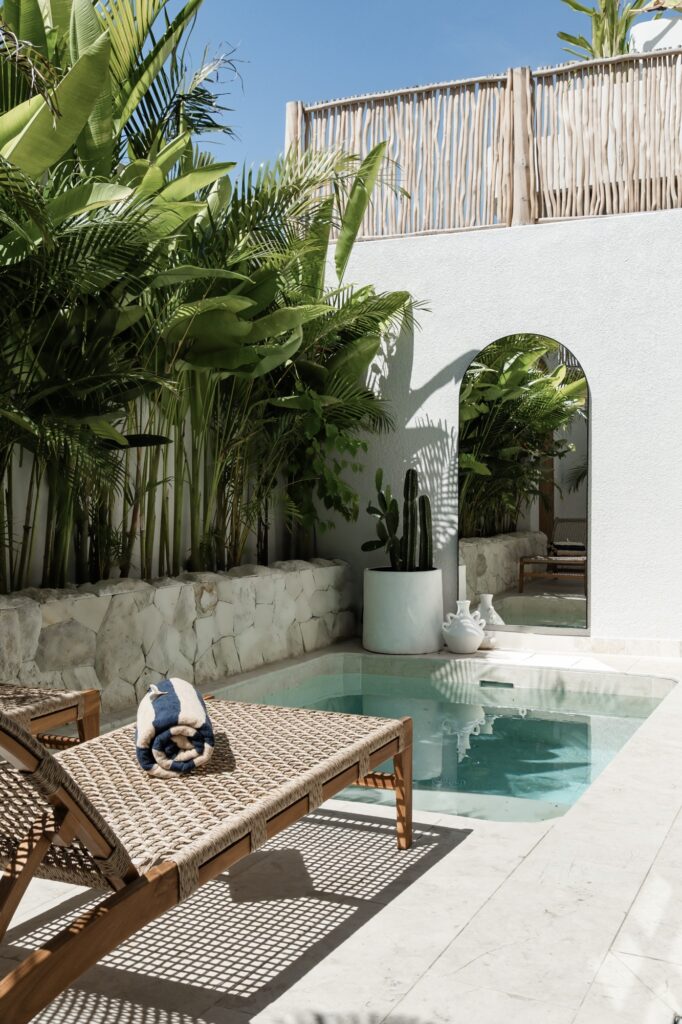
A villa stay near Bingin or Padang Padang puts the Bukit’s best breaks within easy scooter range, and this proximity matters considerably when conditions can shift through the day and an early call on the swell makes all the difference between a great session and a missed one. Explore Casa Kloud's Uluwatu villas for clifftop properties positioned close to the action, offering the kind of post-surf comfort that a surf camp dorm simply cannot match.
After a long session, the cliffs above Uluwatu hold some of Bali’s best sunset spots, and a cold drink at the right moment is part of the ritual here. For a deeper look at where to eat and unwind nearby, our guide to Uluwatu’s best restaurants covers the standout options, while our breakdown of Uluwatu versus Canggu is worth reading for travelers still deciding where to base their trip.
Book your stay at Casa Kloud and experience the best restaurants, beaches, and sunsets that Uluwatu has to offer.

Ready to discover the best of Uluwatu? Casa Kloud offers the perfect base for your Bali adventure.
© 2024–2026 Casa Kloud. All Rights Reserved. All photos are the property of their respective owners; unauthorized reproduction or distribution is prohibited.